Community Feedback Loops Shaping Balance Updates Across Fighting Game Titles
Lars Sullivan · Oct 13, 2026
Community Feedback Loops Shaping Balance Updates Across Fighting Game Titles
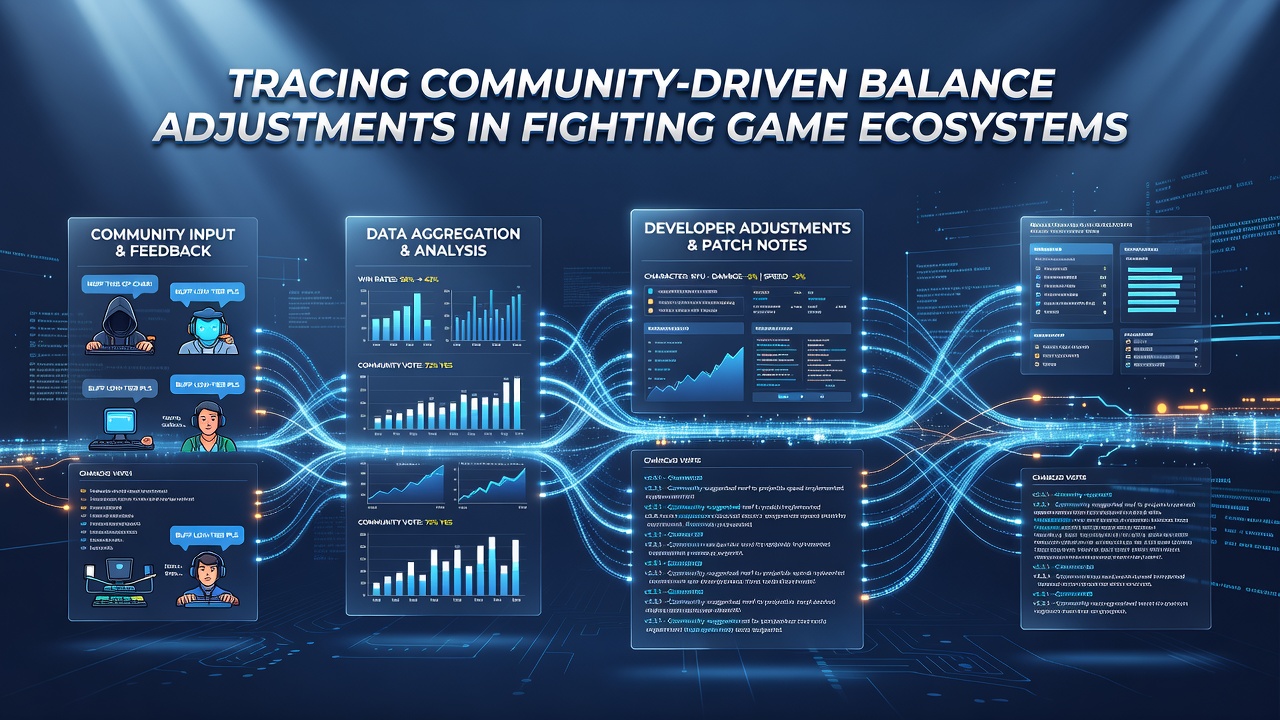
Balance adjustments in fighting game ecosystems trace back through layers of player input that developers collect from tournaments, online forums, and dedicated testing sessions, and these processes have grown more structured since the rise of digital distribution platforms in the early 2000s. Observers note that titles such as Street Fighter and Tekken now incorporate patch notes that directly reference community-submitted data sets on character win rates and move frame data, while developers release public changelogs that cite specific feedback threads or tournament results. Research from the Entertainment Software Association shows that competitive gaming communities generate thousands of hours of recorded matches each month, and these recordings feed into analytics tools that highlight outliers in matchup statistics.
Historical Patterns in Player-Driven Adjustments
Early arcade eras relied on location-based observations where operators adjusted cabinet settings based on repeat player complaints, yet digital eras shifted this dynamic toward global networks that aggregate data from multiple regions at once. One study from the University of Tokyo documented how Japanese arcades in the 1990s logged manual tallies of character usage, and those records influenced later console ports that introduced software-based tuning options. By the 2010s, developers began publishing beta test invites through official channels, allowing thousands of participants to submit match logs that shaped final release patches. Data indicates that Mortal Kombat series updates between 2015 and 2020 addressed over 300 individual move properties after community reports flagged inconsistencies in hitbox interactions.
Platforms and Data Collection Methods
Modern ecosystems use integrated reporting systems within game clients alongside external sites that parse replay files for frame-perfect analysis, and these combined streams produce heatmaps that reveal overpowered strings or underutilized characters. Tournaments sanctioned by organizations like the Evolution Championship Series supply additional datasets because match recordings from those events undergo post-event reviews that flag balance concerns for developer consideration. In October 2026, several major titles released mid-season patches that adjusted recovery frames on specific specials after aggregated data from regional qualifiers showed clear dominance patterns in certain archetypes. External tools hosted on community servers further extend this process by letting users upload logs that feed into shared databases accessible to both players and studio teams.
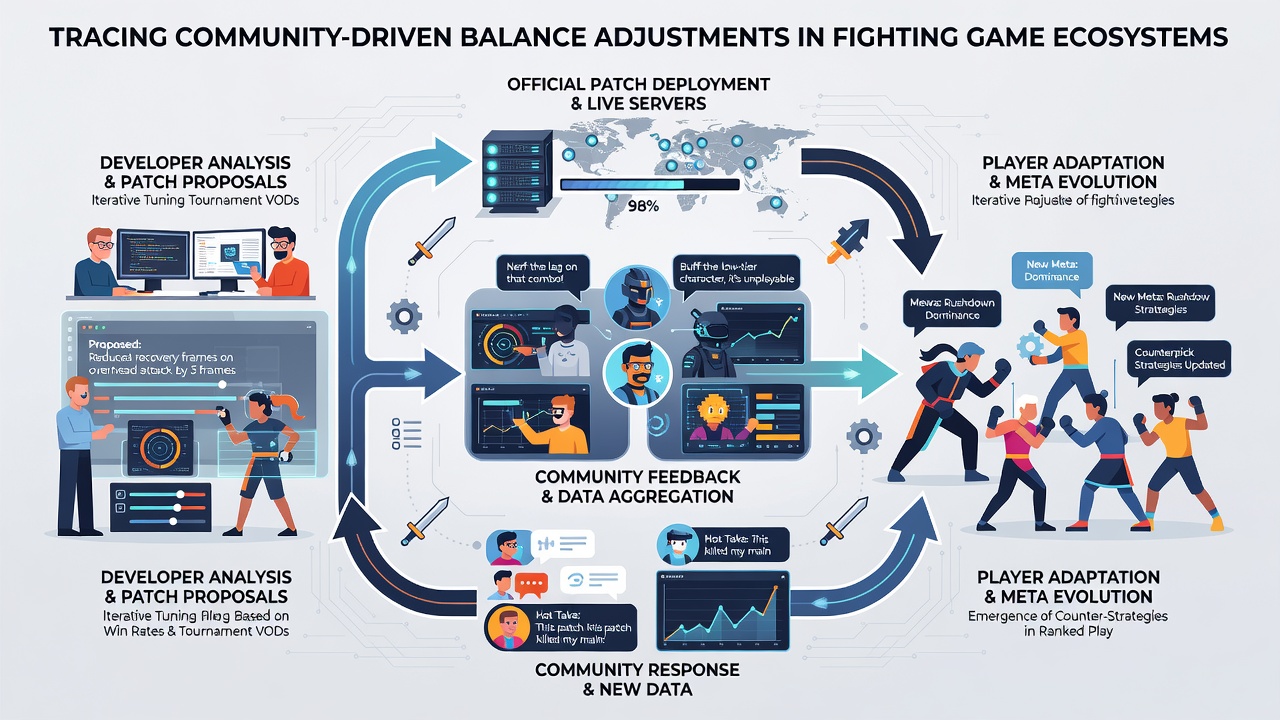
What's interesting is how these platforms create feedback cycles where initial community proposals undergo multiple rounds of verification before reaching official patch notes. Researchers at the International Game Developers Association have tracked cases where suggestions originating in Discord servers reached live implementation within three update cycles, provided the proposals included verifiable replay evidence. European regulatory reports on digital content note that transparency requirements in some jurisdictions now encourage developers to disclose how community metrics influence tuning decisions, which adds another layer of documentation to the adjustment process.
Regional Variations and Global Aggregation
Different geographic scenes contribute distinct priorities to the overall ecosystem, with North American groups often emphasizing tournament viability while Asian communities focus on arcade hardware constraints that affect timing windows. Australian industry reports highlight how local player surveys supplement global datasets by capturing preferences that larger markets might overlook, and these inputs help prevent regional imbalances in cross-play environments. Developers maintain separate tracking for each platform version because input latency differences between consoles and PCs require tailored adjustments that still align with the core community consensus. The ball is in the developers' court once aggregated statistics reach a threshold that signals widespread agreement on needed changes, and studios respond by scheduling hotfixes or full balance seasons accordingly.
Case Examples from Recent Title Cycles
Take the Guilty Gear series, where community-driven frame data projects revealed discrepancies in certain character pressure strings, and subsequent patches incorporated fixes that aligned with those findings. Another instance involves Dragon Ball FighterZ, whose post-launch updates addressed assist character interactions after repeated tournament data showed specific pairings dominating leaderboards across multiple continents. Observers note that these adjustments typically follow a pattern of public beta releases followed by final notes that credit the volume of reports received, which encourages continued participation. Figures from industry tracking services reveal that titles with active community analytics see faster resolution times for balance concerns compared to those relying solely on internal testing.
Conclusion
Tracing these adjustments reveals an interconnected system where player-generated data, tournament records, and developer responses form continuous loops that refine game ecosystems over time. The process continues to evolve with new tools for data sharing and verification, and regional inputs add depth to the global picture without overriding consensus patterns. External sources such as the Entertainment Software Association and academic reviews from institutions like the University of Tokyo document the scale and structure of these interactions, confirming that community contributions now occupy a central role in maintaining competitive integrity across fighting game titles.