Physics Engines Reshape Puzzle Mechanics Through Dynamic Interactions in Virtual Spaces
Ben Ludwig · Oct 27, 2026

Physics Engines Reshape Puzzle Mechanics Through Dynamic Interactions in Virtual Spaces
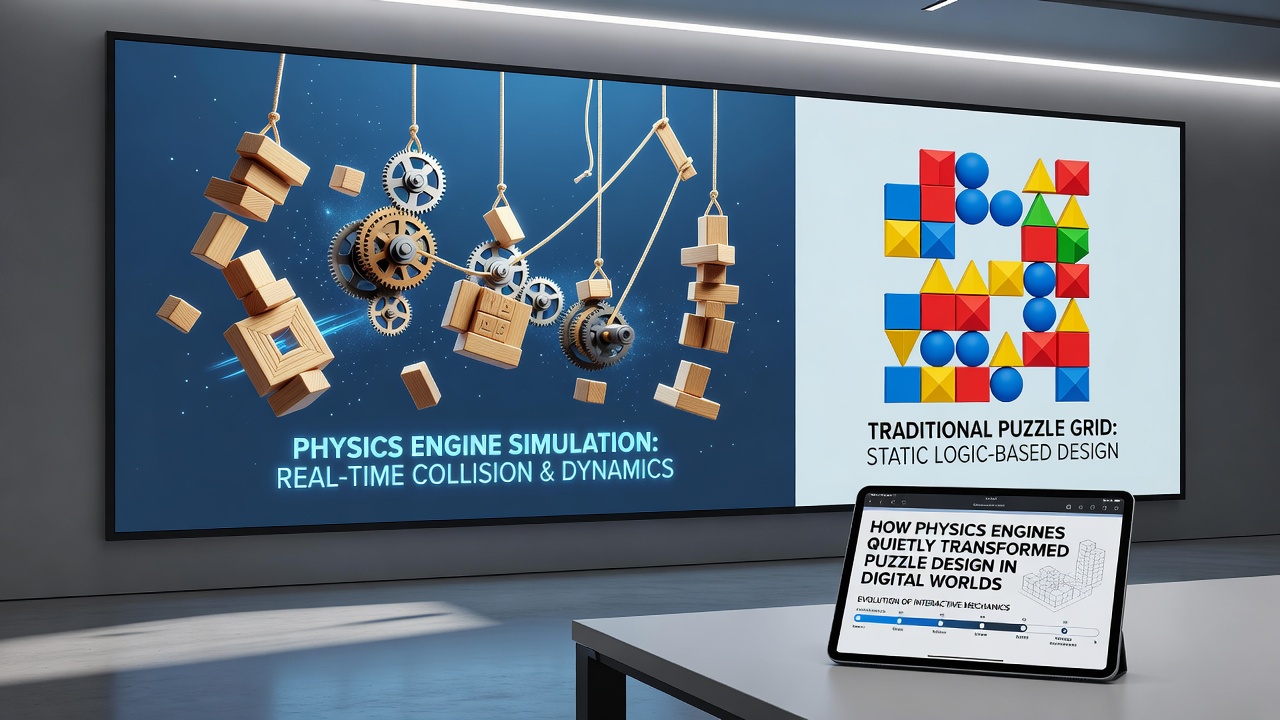
Physics engines have altered how puzzle games operate by introducing real-time calculations for movement, collisions, and environmental forces that replace earlier static layouts. Developers now build challenges around momentum, weight distribution, and material properties rather than fixed sequences of steps. This shift began gaining traction in the late 1990s with early simulation tools and expanded as hardware capabilities increased through the 2000s.
Early Foundations of Physics in Puzzle Structures
Games like The Incredible Machine from 1993 demonstrated basic cause-and-effect chains using simple rules for gravity and object behavior, yet these systems relied on pre-scripted outcomes instead of full simulations. Later engines such as Havok and PhysX allowed for more accurate responses to player actions, enabling puzzles where a single push could trigger cascading reactions across multiple elements. Data from industry reports shows that by 2010, over 60 percent of major puzzle titles incorporated some form of advanced physics modeling according to figures released by the Entertainment Software Association.
Observers note that this evolution moved design away from inventory-based item swapping toward spatial reasoning that accounts for velocity and friction. One study conducted by researchers at the University of Waterloo examined player engagement metrics and found increased session lengths in titles featuring dynamic object responses compared with traditional grid-based formats.
Core Mechanics Transformed by Simulation Layers
Collision detection and rigid body dynamics now form the basis for many modern puzzles, allowing players to experiment with stacking, launching, or redirecting items in ways that produce variable results on each attempt. Soft body simulations add another layer in certain titles, where deformable objects respond differently based on applied force and surface contact. These tools let designers create scenarios that test understanding of physical principles without requiring explicit tutorials on the underlying math.
Examples include portal-based movement systems that preserve momentum across linked spaces, or destruction mechanics where structural integrity depends on calculated stress points. In October 2026, several upcoming releases are scheduled to showcase updated fluid dynamics modules that extend these principles into liquid and gas interactions within puzzle frameworks.
Design Implications Across Platforms and Genres
Console adn PC developers adopted these engines at different rates due to hardware constraints, yet mobile platforms later integrated simplified versions that still delivered responsive interactions on touchscreens. Cross-platform tools have since standardized many simulation features, reducing the need for custom code in smaller studios. Industry organizations such as the International Game Developers Association have documented how shared physics libraries lowered production barriers for independent teams working on puzzle-focused projects.
Case examples reveal that games relying on these systems often feature open-ended solutions rather than single correct paths. Players can approach a problem from multiple angles because the engine processes each input according to consistent physical rules. This flexibility appears in titles that combine construction elements with timing challenges, where incorrect placement leads to realistic failures like toppling structures or missed trajectories.
Technical Integration and Performance Considerations
Engine updates have addressed computational demands by optimizing broad-phase collision checks and using multi-threading for complex scenes. Performance data indicates that modern implementations maintain stable frame rates even when dozens of interactive objects occupy the same space. Research from the European Games Developer Federation highlights continued refinements in constraint solvers that prevent glitches during simultaneous multi-object interactions.
Sound design and visual feedback have also adapted to match these simulations, with audio cues tied directly to calculated impact forces and surface materials. Visual effects such as particle systems for debris or dust further reinforce the sense of physical presence within the puzzle space.
Conclusion
Physics engines continue to expand the range of solvable scenarios available to puzzle designers by grounding interactions in predictable yet flexible rules. This technical foundation supports varied gameplay approaches while maintaining consistency across different player strategies. Ongoing developments in simulation accuracy point toward further refinements that will shape future puzzle experiences in digital environments.