Player Innovations Reshaping Advancement Structures Across Survival Sandbox Titles
Ben Ludwig · Sep 15, 2026
Player Innovations Reshaping Advancement Structures Across Survival Sandbox Titles
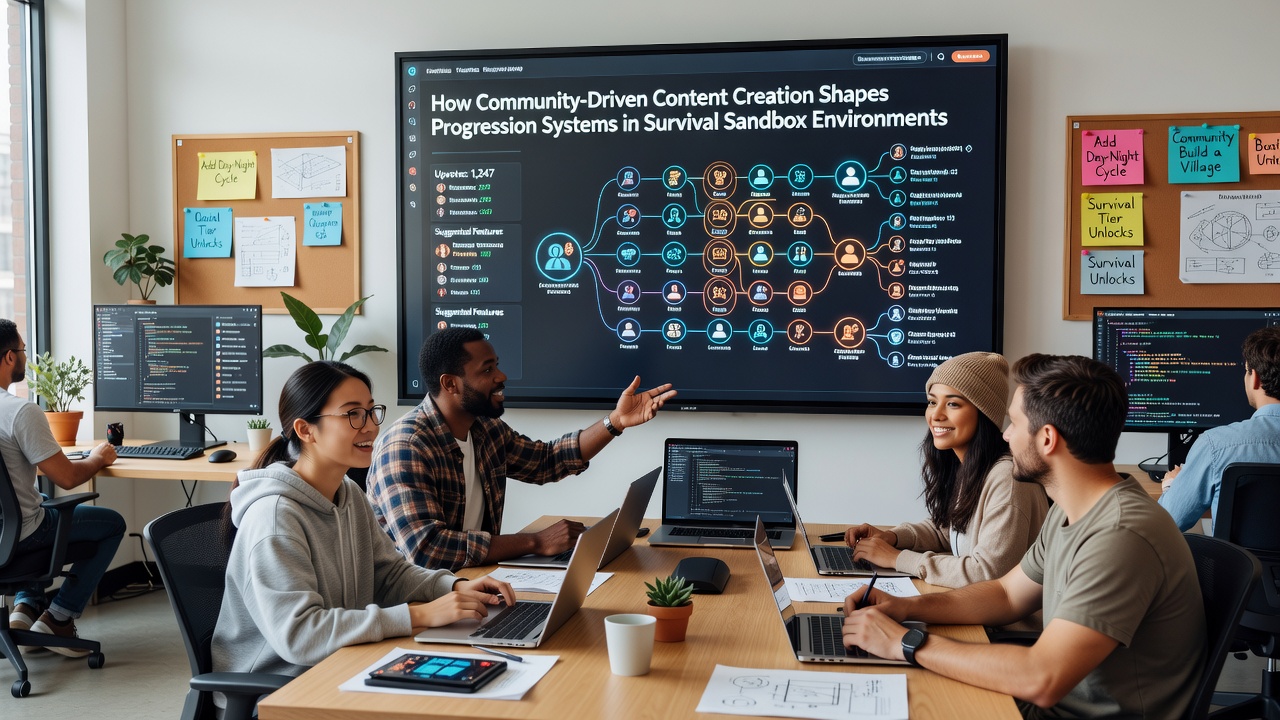
Survival sandbox environments have long relied on player input to expand and refine how characters advance through increasingly complex challenges, and recent data from industry reports shows this pattern continuing into September 2026 with fresh examples emerging across multiple platforms. Developers release core frameworks while communities build upon those foundations through mods, custom servers, and shared resources that introduce alternative tech trees, resource management loops, and milestone systems. According to figures from the Entertainment Software Association, user-generated modifications account for substantial portions of extended playtime in titles that support open editing tools, and those additions often become integrated into official updates over time.
Core Mechanisms Behind Community Influence
Progression in these games typically begins with basic gathering and crafting loops, yet communities introduce layered systems that alter pacing and priorities. One study from the University of California Santa Cruz examined several long-running servers and found that player-designed quest chains frequently replace linear developer paths with branching narratives tied to specific biomes or faction alliances. These contributions spread through shared repositories where creators upload files, documentation, and compatibility patches, allowing others to adopt or iterate on the work without starting from scratch. Data indicates that servers running community packs experience higher retention rates because participants encounter fresh objectives rather than repeating the same early-game routines.
Examples from Established Titles
Take Minecraft, where community packs such as those centered around automation and magic systems have shifted progression from simple mining sequences to intricate automation networks that require planning across multiple dimensions. Players who install these packs report advancing through stages that blend exploration with engineering challenges, and server operators track usage metrics showing thousands of active instances worldwide. Similar patterns appear in Rust, where custom blueprints and raid progression mods create gated content that rewards coordinated group efforts over solo resource hoarding. Observers note that these alterations encourage social structures and long-term planning that the base game only hints at through its building mechanics.
Another case involves Valheim, where community-driven boss order modifications and skill tree expansions have prompted developers to incorporate select ideas into patches released during 2025 and 2026. Research indicates that such feedback loops strengthen because creators document their changes thoroughly, making it easier for official teams to review balance implications before adoption. And while not every suggestion reaches the main codebase, the volume of tested ideas provides developers with real-world data on what keeps participants engaged beyond initial release periods.
Data Patterns and Industry Tracking
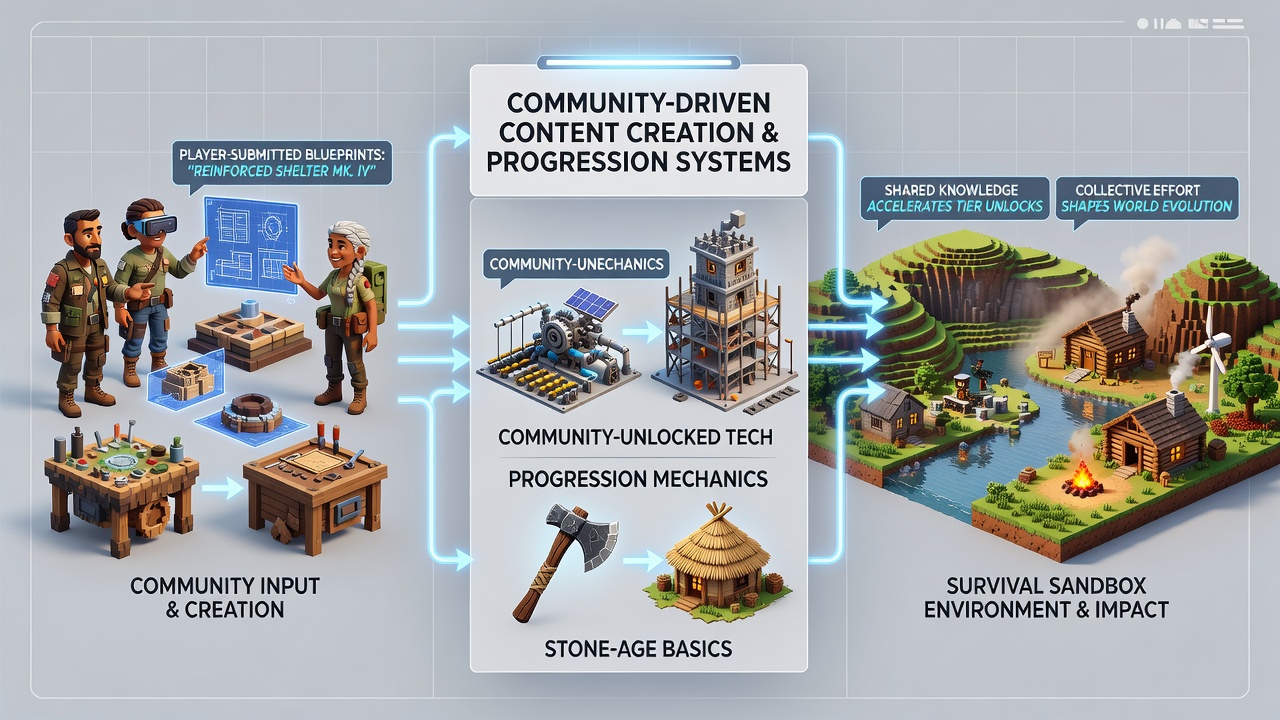
Statistics compiled by the Interactive Games and Entertainment Association in Australia reveal that sandbox titles with active modding scenes maintain player bases 30 to 40 percent larger than comparable games without such support, based on surveys conducted through 2025. These numbers reflect not only download counts but also hours spent within modified environments, where progression systems evolve through iterative community feedback. Server logs often show that new progression features introduced by players lead to increased cross-server collaboration as groups share strategies and refine their own implementations.
What's interesting is how these systems scale across regions. European players frequently adapt mechanics from North American creators while adding localized elements such as seasonal event cycles or region-specific resource nodes. This cross-pollination appears in aggregated reports that track mod compatibility across language communities, and the resulting diversity helps sustain interest during periods when official content updates slow down. Researchers have documented cases where a single popular modification inspired dozens of variants within weeks, each tweaking difficulty curves or introducing new end-game objectives tied to cooperative building projects.
Technical and Social Factors at Play
Implementation relies on accessible editing tools and documentation that lower barriers for contributors. Many environments provide API access or script support that lets creators define new items, experience rewards, and unlock conditions without deep programming knowledge. Communities maintain wikis and forums where individuals upload tutorials alongside their files, and these resources receive regular updates as base games receive patches. Data from multiple server networks shows that titles offering robust toolsets see faster iteration cycles, with progression changes tested and balanced by volunteer groups before wider distribution.
Social dynamics further amplify the effect. Groups form around shared interests in particular progression styles, whether focused on speed runs, role-play campaigns, or large-scale construction feats. These clusters exchange data on optimal paths through custom systems, and their findings often circulate back to broader audiences through video summaries and written guides. The process creates a continuous feedback mechanism where successful experiments become templates for others to follow or modify.
Conclusion
Community-driven content creation continues to expand the range of progression options available in survival sandbox environments, supported by measurable increases in engagement and documented cases of developer incorporation. As platforms evolve and new titles launch with editable frameworks, the patterns established through 2026 demonstrate how player contributions sustain long-term interest while providing developers with tested ideas for future refinements. This collaborative model operates across geographic boundaries and technical skill levels, producing diverse advancement structures that adapt to participant preferences over time.